Showing posts with label sculpture. Show all posts

Lakshmana Temple, Khajuraho

Thursday, September 30, 2010
The Lakshmana Temple is one of the oldest temple in Khajuraho (State: Madhya Pradesh). Belonging to Western Group of Temples it is the largest and beautifully carved temple at Khajuraho. It is built by King Yaovarman of Chandela dynasty between 930 and 950 A.D. (Click on the image for bigger view)

The main shrine of the temple has four subsidiary shrines at the corners of the temple platform.
The temple has columned halls with balconies, an entrance porch, and the inner sanctum.

In the inner sanctum is the sacred image of Vaikuntha-Vishnu brought from Tibet.

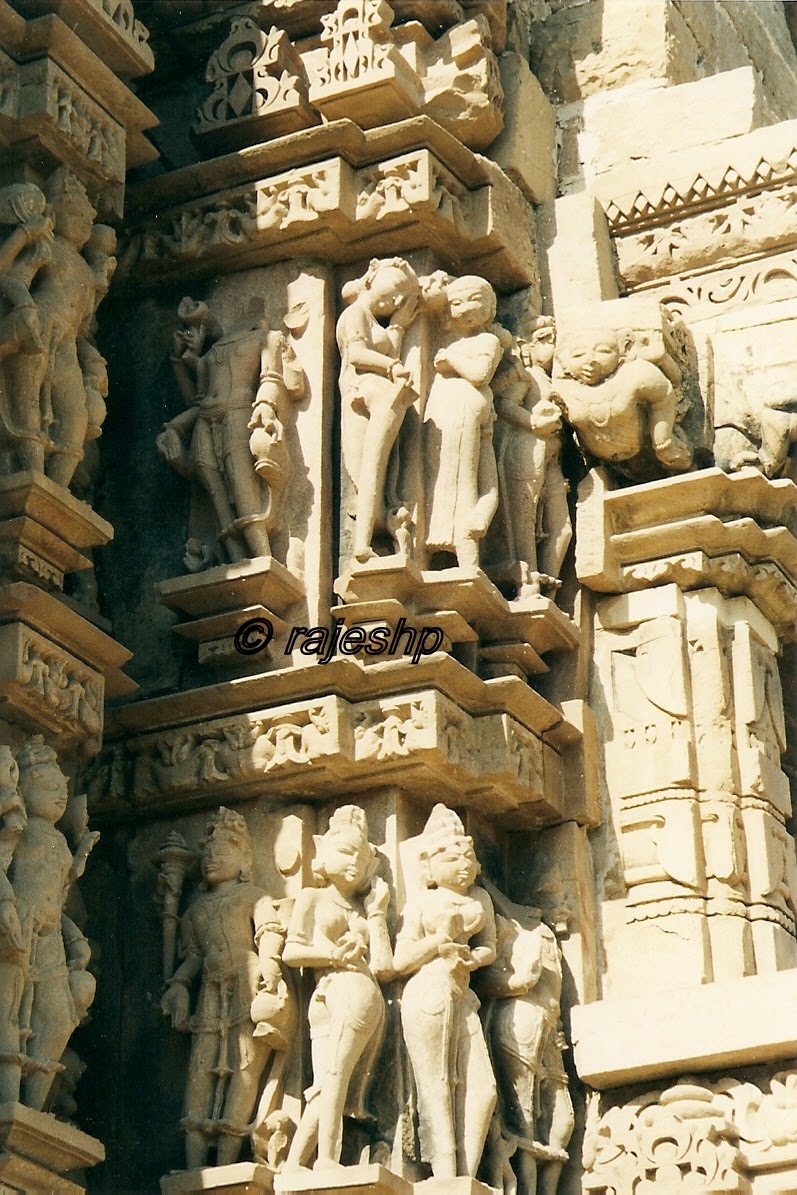
Decorating the sides of the temple are numerous statues. It is exquisitely decorated, almost completely with images of over 600 gods in the Hindu Pantheon. Most of the sculptures have economy of drapery but are effusively patterned with ornaments and flower motifs.

The various carvings and sculptures at this temple.

On the base of the platform are beautifully carved carvings. One such band of carving is King sitting on the throne in the Royal Hall with his ministers. In front of the King dance and music is played.

For more visit Mosaic Monday

Kandariya Mahadeva Temple, Khajuraho

Thursday, September 23, 2010
The Kandariya Mahadeva Temple in Khajuraho (State: Madhya Pradesh) is the finest example of architecture of the medieval period in India. Belonging to Western Group of Temples it is the largest and most ornate Hindu temple at Khajuraho. It is built by King Vidyadhara of Chandela dynasty in 1050 A.D. (Click on the image for bigger view)

The main spire rises to a height of 31 m and is surrounded by 84 miniature spires. Other features of the temple are columned halls with balconies, an entrance porch, and the inner sanctum. Inside the sanctum is a marble linga representing Shiva.

Decorating the sides of the temple are numerous statues and the inner sanctum also has large number of ornate statues. Many of the side panels depict Shiva in the presence of apsaras, consorts, and other divinities. Most of the sculptures have economy of drapery but are effusively patterned with ornaments and flower motifs.

Its ornate gateway is very attractive with carvings on it.

Above is the front view of the temple when Sun rays fall on it. The people around it give us the sheer size of the temple.


Javeri Temple, Khajuraho

Thursday, September 16, 2010
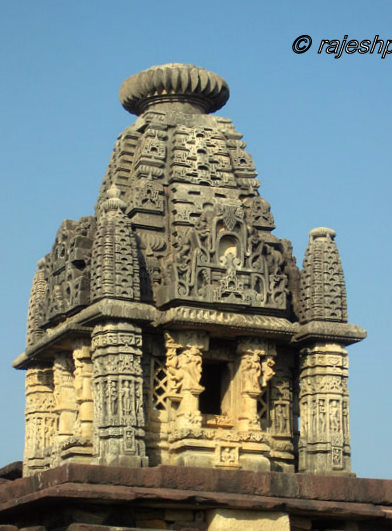
The Javeri Temple built between 950 - 1150 A.D belongs to the Eastern Group of Khajuraho Temples (State: Madhya Pradesh). This is one of the three Hindu Temples built by rulers of Chandel Dynasty in this group. (Click on the image for bigger view)

This temple is a architectural gem. It is dedicated to Lord Vishnu. Its ornate gateway, the makara torana, and slender shikhara are especially noteworthy.

Like every other temple in Khajuraho, even this temple is also famous for the band of sculptures around the temple.

This is rear view of the temple.

=

Vamana Temple, Khajuraho

Thursday, September 2, 2010
The Vamana Temple built between 950 - 1150 A.D belongs to the Eastern Group of Khajuraho Temples (State: Madhya Pradesh). This is one of the three Hindu Temples built by rulers of Chandel Dynasty in this group. (Click on the image for bigger view)

It measures 19.1 meters in length and 13.9 meters in breath. This is a medium size temple. It consists of a mandap and garbha graha.

Around the temple are two band of sculptures with almost 3000 sculptures. This is less than half when compared to larger temples in Western Group of temples. The sculptures layout is a blend of gods, their consorts, female figures and mythical creatures.

In the garbha graha there is a dwarf image of Vamana, an incarnation of Lord Vishnu.

Adinath Temple, Khajuraho

Thursday, August 19, 2010
The Adinath Temple built in 950 - 1150 A.D belongs to the Eastern Group of Khajuraho Temples (State: Madhya Pradesh). This is one of the three Jain temples built by rulers of Chandel Dynasty inside the compound wall. (Click on the image for bigger view)

As the name suggests, it is dedicated to to the Jain Tirthankara Adinath. The temple is constructed in the form of 'sapta-ratha' with a single towered 'shikhara'.

The exterior walls of the temple is decorated with the lavishly carved figures of court musicians, gods and goddess.

Shiva Temple, Survaya Ki Grahi

Monday, April 19, 2010
Survaya Ki Grahi is a big auditorium of stone. There is a Shiva temple with the idol still inside it. The temple has beautiful carvings on the exterior as well as on the ceiling. The below are the images of the Shiva temple. (Click on the images for bigger picture)

Above is the entrance to the temple. The idol can be seen inside and the carvings are all around the entrance.

Above is the intricate carvings in the ceiling of the temple.

Above is the carvings on one of the external walls of the temple.

To see other participants at: That's My World Tuesday

Survaya Ki Grahi Temple - 2

Thursday, April 15, 2010
Survaya Ki Grahi is a big auditorium of stone. There is a Shiva temple with the idol still inside it. There are two more temples here without the idols in it. The below are the images of temples without the idol inside them. (Click on the images for bigger picture)

This is a temple beautiful carvings all around it.

The above structure is in front of the temple.

The above structure is on the top of the residential area of the students and teacher.

Stone Chariot, Hampi

Wednesday, March 10, 2010
At Hampi, the stone chariot located in the Vittala Temple Complex is a shrine built in the form of temple chariot. An image of Garuda was originally enshrined within its sanctum. Garuda, according to the Hindu mythology, is the vehicle of lord Vishnu. (Click on all the images for bigger picture)

The chariot built with many giant granite blocks. The joints of the blocks are smartly hidden in the carvings that adorn the Stone Chariot and due to this it appears as a monolithic structure. It is built on a feet high rectangular platform. All around this base platform is carved with mythical battle scenes. The four giant stone wheels attached to the chariot look complete with the axis shafts. On the wheels are concentric floral motifs.

In front of the chariot two elephants are positioned as if they are pulling the chariot. These elephants where later additions to the chariot and they actually replaced two horses that were carved in that position. The tails and the rear legs of the horses can be still seen just behind these elephant sculptures. A broken stone ladder once gave access to the sanctum is kept between the elephants.

Sun Temple, Gwalior

Thursday, February 25, 2010
Actually we started the sight seeing at Gwalior by first visiting this temple and then moved on to see the heritage sites in and around the city. (Click on all the images for bigger picture)

It is located 5 kms from city center. This is a very new temple and was constructed in 1988. It is inspired by architecture of the famous Konark Temple in Orissa.

The exterior of temple uses red stone while the interior uses white marble. There is a beautiful sculpture of Lord Surya in the temple. The carvings on the exterior of the temple depict various Hindu Gods and they have been carved beautifully.

Even though this temple is pretty new it attracts lot of visitors. The temple premises has a beautiful garden and is a nice place to relax.

To see other ruby participants at: Ruby Tuesday

Padavali Temple

Monday, February 1, 2010
Around Gwalior there are plenty of places of historical importance. One among them is Padavali located at a distance of 40kms from Gwalior. (Click on all the images for bigger picture)

Here in the fortress of Padavali there exists a magnificent temple. The premises of fort has to to be entered by climbing a set of steps. The temple and a small residential complex are the only two structures inside the fort. The temple displays classic architecture, which is as good as any of the famous temples in its time. Most of the sculptures are in the ceiling.


This temple depicts the ten incarnations of Lord Vishnu, Ram Leela, Krishna Leela, Mahabharat, marriage of Lord Ganesha, and Samudra Manthan among various other things. The image of Lord Shiva dancing in the cemetery in Preta form is a specialty of this beautiful shrine.

An abode of numerous Hindu gods and goddesses, devotees will be enriched with devotion by the holy darshan. They all look so novel as if they were built just recently.

The carvings in the ceiling are unique and no two carvings are identical.

From here we next moved to Mitavali.

Distance: Padavali ---> Mitavali 12 kms

Monolithic Bull, Hampi

Thursday, January 7, 2010
The monolithic bull, is one of the beautiful structures in Hampi. This bull is locally known as Yeduru Basavanna. It is located at the the east end of Virupaksha Bazaar, and it stands like a guard opposite to Virupaksha Temple. (Click on all the images for bigger picture)

The sculpture is placed in a two storied pavilion constructed on a high platform at the foothill of Matunga Hill. A heap of gigantic boulders behind the pavilion offers an picturesque view.

Though partly mutilated, it attracts lot of tourists for its sheer size.

Vittala Temple, Hampi

Tuesday, September 1, 2009
Hampi, is the cradle of Vijaynagar architecture as showcased by various monuments in the region. But,the Vittala Temple is the prime attraction among them. No words of explanation can do justice to the architectural extravaganza of this temple. The construction of the temple was initiated in 1513 AD by the Maharaja Krishnadevaraya. The work was later supported by its successors Achuta and Sadasiva till its destruction in 1565 AD. (Click on all the images for bigger picture)

Sculptures on the tower of gateways

The sprawling temple campus was built inside the high boundary walls with 3 gateway towers on the east, south and north. The eastern entrance is used for entry into the temple complex. Inside this campus there are many halls, pavilions and temples.

Stone chariot

In front of the main temple is the Stone Chariot. This has become a iconic monument in Hampi. Even though it is referred as monolithic, it is in fact built with many giant granite blocks. (Click on all the images for bigger picture)

Temple Maha Mandap

The Vittala Temple stands on a strong ornate stone basement that has been richly carved with designs of horses, elephants, dancing girls, floral motifs and soldiers. The temple can be entered through a series of steps flanged by elephant balustrades that leads to the Maha Mantapa. This contains four open halls within. While the central western hall has collapsed, the south, north and the east ones are still intact.

musical pillars

The main attraction of Maha-Mantapa is its superbly carved giant monolithic pillars. The outermost of the pillars have slender and short pilasters carved out of the giant pillars. They are known as musical pillars as they emit musical tones when tapped. The tapping on it is not permitted for the sake of preservation. (Click on all the images for bigger picture)

Sculpture on the pillar

The eastern hall is known as the musicians hall because of the sculptures of musicians on the pillars. The southern hall pillars are carved with mythical creatures called Yalis. The northern hall is surrounded with a series of pillars with the Narasimha themes. The ceilings of the halls are carved with lotus in the centre. The inner sanctum is devoid of any idol.
(Click on all the images for bigger picture)

Pillared Hall in the temple campus

Even the other halls inside the campus are equally worth noticing. There is a 100-pillared hall at the southwest, the ceremonial marriage hall in the southeast. Even they have been richly carved.

Laksmi Narasimha Temple, Hampi

Thursday, August 6, 2009
If the monolithic Ganesha Statues of Hampi are around 2.3 meters, the statue of Lord Narsimha is much larger than them. This is the biggest statue in Hampi and is of 6.7 meters in height. This statue has been constructed out of a single boulder. As per the inscriptions found it was carved in 1528 A.D. during the rule of Krishnadevaraya.

Ugra Narasimha (Click on the image for better view)

This idol of the Narasimha was well designed and has large bulging eyes and broad chest, and it is a architectural beauty. Here the Lord is in cross-legged yoga position with the belt supporting the knees. Originally, during the glory days of Hampi, the Goddess Laksmi was seated on his lap. This is confirmed by the presence of one of her hands on the back of the statue. The carving of hand of the Goddess has the finger nails and rings still intact. But due to the destruction in 1565 A.D the
Goddess Laksmi statue was badly damaged and today we can only see the Lord Narsimha alone without the Goddess. The Lord is sitting on the coil of a giant seven-headed snake called AdiSesha. The heads of the snake forms a hood above his head. The entire image is set within the beautiful Makar Torana an arch, with a lion-mask above the hoods of Adisesha. On the either side of the statue there are lions as guard.

This is also popularly known as Ugra Narasimha which means terrifying form. This is attributed to the protruding eyes and the facial expression. Narsimha means half-man and half-lion.

Virupaksha Temple, Hampi

Saturday, July 18, 2009
Hampi has several architecturally beautiful temples. Virupaksha temple is the oldest among them and is located on the south bank of the river Tungabadra. It is principal temple of Hampi as it is believed that this temple has been functioning uninterruptedly ever since its inception in the 7th century AD. The temple can be accessed through the chariot street popularly known as the Hampi Bazaar.

Main entrance tower (click for larger image)

The main entrance tower of Virupaksha Temple is east facing and is a huge 9 storied tower. The lower two tiers of the tower is made of decorated stone work. The tower progressively diminishes as it moves upward and the
structure is made with brick and mortar. From the tower one will enter into two large courtyards, which are linked to each other. The first courtyard has a pillared hall called 100-column hall at the far left corner, Kalyanamantapa at the far right corner. As soon as one enters this place one can to see on the left side Triple headed Nandi (bull statue).


Triple head Nandi

In the open area in the center there is a pillared cloisters leaving gaps at the north, south and east edges for a series of sub shrines. The front portion has a row of decorated pillars. It looks like the lion figure carved at the base of each of these pillars supporting the slender upper portions. The most striking feature of this court is the central pillared hall known as the Ranga Mandapa added to the temple complex in 1510 AD by Krishadeva Raya. Two mythical lion like creatures forms the balustrade for the entrance to this elevated open pavilion. This hall with 5 aisles and 38 pillars is used for temple rituals including the marriage ceremonies. The highlights include rows of pillars shaped with rampant lion like mythical creatures (Yalis) standing on aquatic creatures (Crocodiles).

pillared cloisters (click for larger image)

At the sanctum of Lord Virupaksha there are two 4 armed guardian deities, about 8 feet tall, stand on either side of the entrance to the inner hall. The sanctum contains the idol of lord Virupaksha in the form of a Linga .

The must see part of the temple is at the rare of temple complex. Behind the main sanctum a flight of steps leads to the rear exit of the temple complex. Just before the exit on the right side there is a dark chamber with a slit on the wall. The sun ray pass through this slit forms an inverted shadow of the main tower on the wall. This was designed in those early days and a masterpiece.

Venugopalaswamy Temple, Devanahalli

Monday, June 29, 2009
Devanahalli is a small town located at a distance of 35 kms fro Bangalore. There is lot of history associated with this place and there exists a beautiful Fort. There are many temples in the fort dedicated to Venugopalaswamy, Nanjundeshwara, Chandramauleshwara, Veerabhadraswamy, Ranganathaswamy etc., which belong to various era.

The Venugopalaswamy temple is the oldest temple. It has a tall Rayagopura at the entrance and has a spacious inner Prakara with Garuda Stambha. At the entrance are placed two Vishnu statutes of Ganga times.

Rayagopura

the shikara on inner prakara and garuda stambha

On the pillars of the main entrance stand two horsemen with swords unsheathed.
On these pillars on all other sides there are beautiful sculptures like dancing females, and warriors etc.,

Pillars at the entrance

The Garbhagriha has a standing Venugopala image of Vijayanagara style. The Navaranga in front of Garbhagriha has four black stoned pillars carved with fine relief sculptures on all sides.


One of the pillars in the Navarang

There are many sculptures on these pillars, such as Hayagriva, dancing female figures with attendant musicians, a conch blower, a Kinnara with the lower portion of his body in bird form, a huntress removing a thorn from her leg, etc.


dancing female

kinnara

The outer walls have a frieze of large images illustrating scenes mostly from the Ramayana and the feats of Lord Krishna as a child.


scene from Ramayana

How to Reach There

This place is located on Bangalore - Hyderabad National Highway 7. On this road do not take a deviation to the airport. But still proceed until you reach a junction with circle on the road.

To see the World visit other participants at: That's My World Tuesday.

Blogroll


Submit Your Site To The Web's Top 50 Search Engines for Free!

free search engine website submission top optimization
My Zimbio


Feedage Grade B rated


Preview on Feedage: indian-travel

Add to My Yahoo!

Add to Google!

Add to AOL!

Add to MSN


Subscribe in NewsGator Online

Add to Netvibes

Subscribe in Pakeflakes

Subscribe in Bloglines

Add to Alesti RSS Reader


Add to Feedage.com Groups

Add to Windows Live

iPing-it

Add to Feedage RSS Alerts

Add To Fwicki


Add to Spoken to You


Related Posts Plugin for WordPress, Blogger...